
A drainage system might seem good in normal weather, but a heavy storm can reveal every weakness in the infrastructure of a home. Parking lots may flood, detention pools fill up too fast, roads are dangerous, and areas that are low-lying begin to gather water. In many instances it’s not the rain that causes these issues. It is that the site is not equipped with the right technology to effectively move stormwater, when gravity alone is not enough.
A stormwater lift station becomes essential. The systems are intended for collecting and pumping stormwater away places where runoff naturally accumulates while also protecting buildings, roads and outdoor spaces. Lift stations are the most important element of every project, no matter if they are industrial, municipal commercial, residential or. They are also important in keeping the site running throughout and after storms.
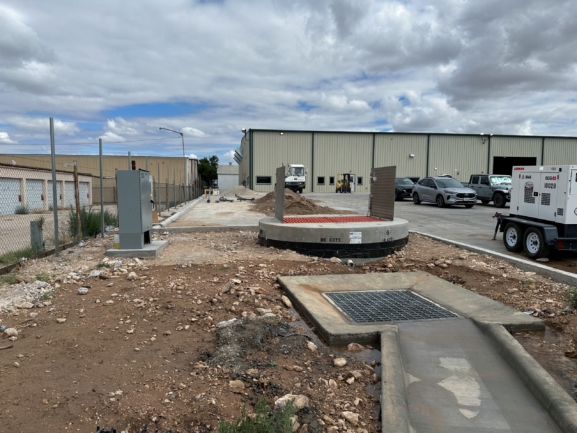
Stormwater management needs to be developed for the particular site.
Every property is different in how it handles runoff. Retail centers with huge paved parking areas behaves differently from a residential subdivision. The property types will be able to meet the requirements that a industrial site or a municipal drainage project would. Stormwater management systems are designed according to a range of elements, including flows, elevations of the site, the detention requirements and discharge conditions.
Romtec Utilities doesn’t treat stormwater pumping like a standard service. Each system’s design is based on the particular pumping scenario of the specific site. It could be used to limit flooding, drain a detention pool, control the runoff from a developed property and support a bigger municipal network and more. The most effective solution will depend on the amount of water required to move and how fast.
A stormwater runoff pump station goes further than a mere pump in a vault
A solid stormwater runoff pump station requires far more than high-powered equipment. It works as an integrated system that combines mechanical, electrical, structural and control components in a seamless manner to manage stormwater volume efficiently and continuously. To guarantee that the station performs optimally throughout its life, critical factors like precise pump sizing, precise wet well design, sophisticated controls and durable piping, as well as robust power systems, and real-time monitoring all must work in perfect harmony.
This level of complete system integration is precisely why the top stromwater system designers stand out from the competition. An exceptional design does not simply fix an immediate drainage problem; it requires a proactive, long-term approach. Top engineers regularly consider the ease of long-term upkeep as well as the future requirements for the site and the maximum efficiency of operations. The whole system has to be designed to stand up to the toughest environments and not be based on flawed assumptions.
This meticulous planning is equally essential whether you’re dealing with flooding from torrential waters or designing high-pressure municipal networks such as booster pumps for water purification where system failure is never an option. Romtec Utilities designs its stormwater systems based on these particulars. They offer a variety of pump stations built for various uses. The pumps are accompanied by documentation, training and startup support to ensure that the owner is in control of the system.
Better planning creates better flood protection
A well-designed stormwater pump station is able to reduce risk of flooding, improve the site’s usability, and protect properties around it from damage caused by water. The pump station also can improve a site’s resilience by ensuring that runoff during heavy rain is controlled efficiently and effectively.
It’s easy to overlook stormwater infrastructure until it breaks down. When runoff must be actively managed, a reliable stormwater lift station is a vital investment for any developer, property owner, or municipality. With the right design and the right support, a strong stormwater management system helps keep a site safer, more functional, and better prepared for the realities of changing weather.